Team Leadership Development
Build a Team Strengths Map: Turn Talent Into Advantage

You may know your people well and still miss the team pattern.
You know who steps in when work gets messy. You know who asks the question no one else wants to ask. You know who can settle a tense room, spot a gap in a plan, or turn loose ideas into next steps.
But a team strengths map asks a different question.
It asks, "What can this group do together, and where are we relying on the same few people too often?"
That matters because most assignment problems do not start with laziness or lack of talent. They start with unclear visibility. The reliable person gets every urgent handoff. The quiet analytical person is missed until something breaks. The relationship-builder carries every tense conversation because the team has not learned how to pair strengths well.
A team strengths map gives you a simple way to see the whole pattern before you assign the next round of work.
What a Team Strengths Map Actually Shows
A team strengths map is a working view of who brings what, where capability clusters, where gaps exist, and how strengths can be paired with current work.
It is not a personality wall.
It is not a label exercise.
It is not a way to excuse people from hard work.
Used well, it helps a leader slow down long enough to see the team clearly. That pause matters. It keeps you from confusing availability with fit, confidence with capability, or one person's reliability with a sustainable team system.
Gallup's CliftonStrengths team guidance 1 is useful here because it treats strengths as a common language for working together. Gallup describes a team grid that shows collective strengths across Executing, Influencing, Relationship Building, and Strategic Thinking. The point is not the grid itself. The point is shared language.
When people understand how others contribute, collaboration gets less personal and more practical.
Instead of saying, "She always slows us down," the team can say, "She sees risk early. We need that before launch, but not in the idea stage."
Instead of saying, "He talks too much," the team can say, "He can build energy around a decision. Let's use that when we need buy-in."
That shift protects trust. It also gives the leader better choices.
The Columns That Make the Map Useful
Keep the first version simple. A useful team strengths map can fit on one page.
| Column | What It Captures |
|---|---|
| Person | The team member's name |
| Repeatable Strength | What they do well often enough to trust |
| Evidence | Where you have seen it in recent work |
| Best Use | The kind of work where this strength helps most |
| Risk or Overuse | What happens when the strength gets pushed too far |
| Good Pairing | Who complements this strength |
| Current Work Fit | Where this strength belongs now |
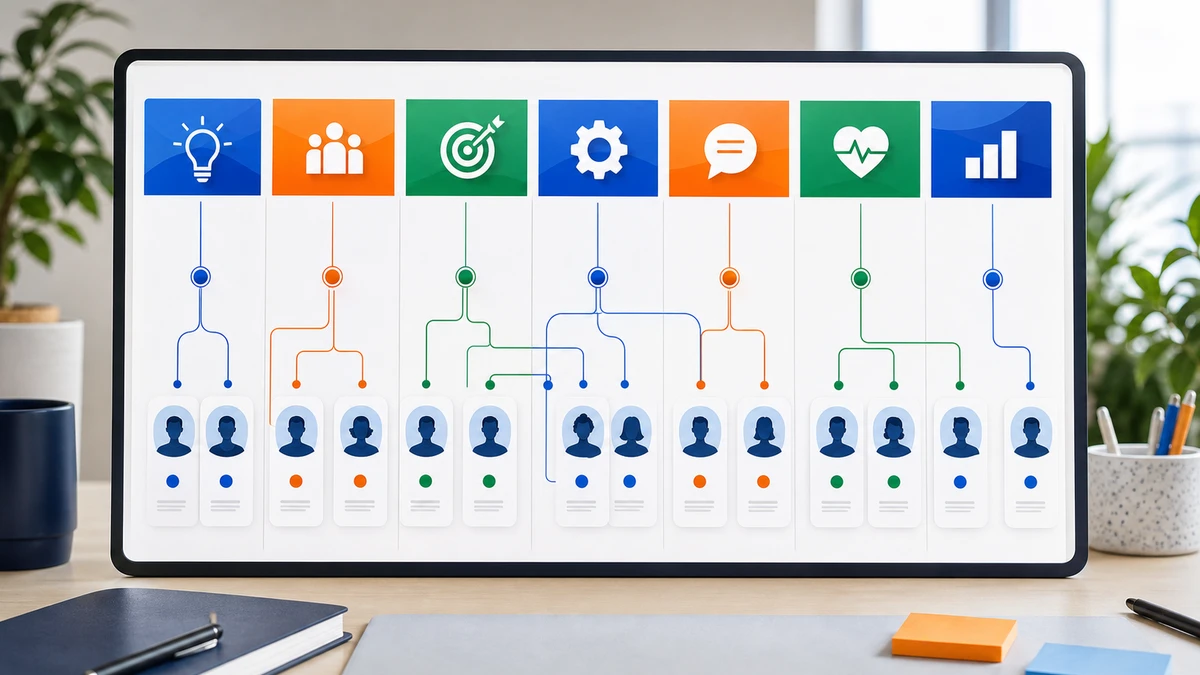
The evidence column matters most.
Without evidence, the map becomes opinion. "Good communicator" is too broad. "Summarized a tense client call so the team could decide next steps" is useful. "Strategic thinker" is too vague. "Spotted the dependency between sales promises and delivery capacity before the quote went out" gives you something to coach from.
This connects directly to strengths-spotting one-on-ones. You are not hunting for flattering labels. You are listening for repeated contribution.
The overuse column matters too. Every strength has a shadow when it is tired, unsupported, or used in the wrong moment.
A detail strength can become delay. A relationship strength can become avoidance of hard truth. A fast execution strength can become impatience with people who need more context. A strong strategic strength can become frustration with routine follow-through.
Naming that risk does not criticize the person. It helps the team use the strength with more care.
Build the First Map in 45 Minutes
Do not turn this into a full talent review. You can build a useful first draft in 45 minutes.
Start with the work already in motion.
Pick one team, one quarter, or one major project. Then list the people who affect the outcome. Do not include every skill they have. Start with one or two strengths that show up clearly in real work.
For each person, write one piece of evidence beside the strength.
Ask yourself:
- What kind of problem does this person naturally notice?
- Where do others already ask for their help?
- What work seems to give them useful energy?
- What contribution has repeated across more than one situation?
- What does the team lose when this person is absent?
Then add the current work fit.
That last step keeps the map from becoming a nice internal document with no leadership value. A strength only helps the business when it touches real work. If someone brings order to scattered work, where is the scattered work right now? If someone builds trust quickly, which relationship needs attention? If someone sees patterns early, where are you making decisions with incomplete information?
Gallup's strengths conversation guidance 2 says productive teams share mission and purpose, understand each member's strengths, and use those strengths with intention. That is the standard. The map is only a tool to help you practise it.
Once the first draft is done, test it with the team. You do not need to share every note. You do need enough openness for people to correct, add, and recognize the pattern.
Ask:
- What strength did we rely on last month?
- What strength did we miss until too late?
- Where are we overusing one person?
- Which two people should work closer together on the next assignment?
Those questions turn the map into a coaching conversation instead of private management analysis.
Use the Map Before You Assign Work
The fastest assignment is often the one you hand to whoever is available.
Sometimes that is necessary. A client is waiting. A deadline is close. The work needs to move.
But if availability becomes your normal assignment system, the same patterns repeat. The calm person gets every difficult conversation. The strongest planner gets every messy handoff. The creative person gets brought in late and asked to make a weak idea more exciting.
That is not team development. It is accidental load balancing.
Before the next meaningful assignment, look at the map and ask three questions:
- What strength does this work need?
- Who has evidence of that strength?
- Who needs to be paired so the work is stronger than either person alone?
This is where a team strengths map is different from strengths-based work assignment. Work assignment focuses on matching one person to one piece of work. The map helps you see the wider team pattern before the assignment lands.
It may show that the obvious person is already overused. It may show that the best person to lead the work needs a partner, not a rescue. It may show that the team has three people strong in execution and almost no one close enough to customer tension.
That is useful information before the work starts.
The Center for Creative Leadership's DAC model gives a helpful lens here. CCL defines leadership by the group outcomes of direction, alignment, and commitment: agreement on what the group is trying to accomplish, coordinated work toward that direction, and mutual responsibility for group success. A strengths map supports all three when it is tied to real work.
Direction gets clearer because people understand why certain strengths matter now. Alignment improves because work is paired with the right contribution. Commitment grows because people see that the leader is not simply loading the same few people again.
Pair Strengths Instead of Waiting for Friction
Most collaboration issues show up after the work is already moving.
Two people clash over pace. One wants more context. One wants a decision. One keeps opening possibilities. One wants to close the loop.
That friction is not always a sign of poor teamwork. Sometimes it is two useful strengths operating without enough agreement.
A team strengths map lets you pair people before the friction hardens.
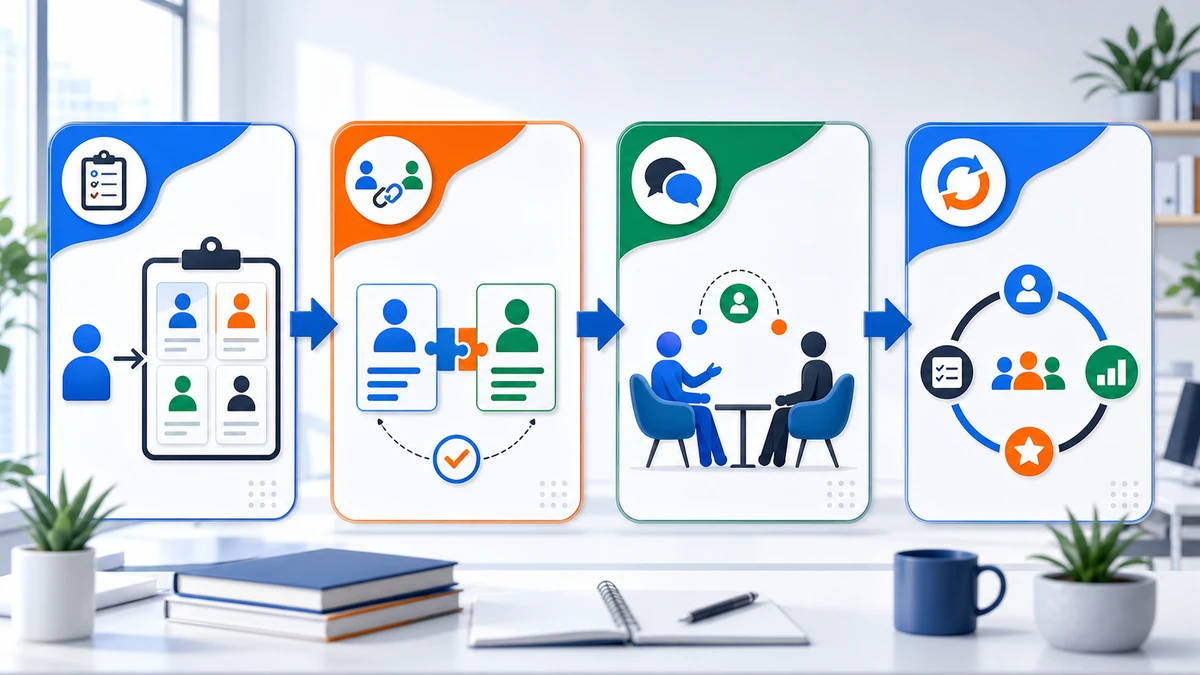
Pair the person who sees risk with the person who can move a decision forward. Pair the person who builds trust with the person who brings structure. Pair the person who spots long-term implications with the person who can turn the idea into a Thursday afternoon plan.
ADP's StandOut 3 puts this plainly: a team is well rounded because individual team members are not. That is a healthy standard for leaders. You do not need every person to be complete. You need the team to know how to combine what people bring.
This is where delegation without abdication still matters. Strengths do not remove the need for clear ownership, decision rights, standards, and check-ins. The map helps you choose and pair people. Delegation still clarifies how the work will be carried.
You need both.
Debrief the Map After the Work
The map gets better after real work tests it.
Do a short debrief after a project, client handoff, team push, or difficult decision. Keep it practical.
Ask:
- Which strengths helped the work move?
- Which strength did we overuse?
- Where did a pairing work better than expected?
- Where did the map miss something important?
- What should we change before the next assignment?
This is where active listening becomes a leadership tool, not a soft skill. You are listening for the team's real experience of the work. Who felt useful? Who felt stretched? Who carried too much? Which contribution went unseen?
If you only debrief the outcome, you miss the learning. If you debrief the strengths behind the outcome, the team gets clearer about how it wins.
The map should change. That is a good sign. People grow. Work changes. Pressure reveals strengths and overuse patterns you could not see in a planning conversation.
Treat the map as a living leadership document.
Where Team Strengths Maps Go Wrong
The first trap is labelling people too tightly.
"You are the relationship person" can sound positive and still become a box. Better language is, "You often notice relationship tension early. We need that in this planning conversation."
The second trap is keeping the map private. Some notes may stay with the leader, but the team needs enough shared language to use the map. If people cannot recognize themselves in it, they will not trust it.
The third trap is using it once and forgetting it. A stale map is worse than no map because it creates false confidence.
The fourth trap is ignoring business needs. Strengths do not decide everything. Sometimes the work needs a person to stretch, learn, or step into something uncomfortable. The map should help you support that stretch, not avoid it.
The fifth trap is confusing strength with preference. People do not always prefer what they are good at, especially when they have been overused. If your best relationship-builder is tired of carrying every tense conversation, the answer is not to keep praising the strength. The answer is to spread capability.
That is a leadership responsibility.
The Tradeoff Is Worth It
A team strengths map slows you down for a few minutes.
That is the tradeoff.
You will spend a little more time before assigning work. You may need to ask one better question in a one-on-one. You may need to explain why two people are paired instead of sending the task to the fastest person.
But those minutes can prevent avoidable confusion later.
They can reduce bottlenecks around the same reliable performer. They can help quieter strengths become visible. They can help people understand why their contribution matters to the team's direction, not just their own task list.
Here is the move for this week.
Pick five people. Build a rough team strengths map with the seven columns. Do not make it perfect. Then look for one overused person, one hidden strength, and one pairing that would make current work stronger.
Have one conversation from that map.
Not a big announcement. Not a workshop. One clear conversation.
"I noticed we keep asking you to carry this part of the work. You do it well, but I do not want that to become unfair. I want to pair you with someone who brings a different strength so the team learns to carry this better."
That is how a simple map becomes leadership practice.
Let's Build Brilliance Together
A team strengths map helps you see more than individual talent. It helps you build a team that can assign work, pair strengths, and grow capability with more intention.
If you are recognizing the pattern of overused reliable people, hidden strengths, or collaboration friction that keeps repeating, reach out for a free consultation. No sales pitch, just an honest conversation about where you are and what you're working on.
Research Notes & Sources
If you want to go deeper, these are the studies and reports behind the key points in this post.
- CliftonStrengths for Teams and Managers (gallup.com)
- How to Have Strengths Conversations (gallup.com)
- StandOut Powered By ADP (adp.com)
Category & Tags
Frequently Asked Questions
What is a team strengths map?
A team strengths map is a simple view of who brings what, where capability clusters, where gaps exist, and how strengths can be paired with current work.
How do I create a team strengths map?
List each person, name one or two repeatable strengths, add evidence from recent work, then note best use, overuse risk, useful pairings, and current work fit.
Is a team strengths map the same as a skills inventory?
No. A skills inventory shows what people can do. A team strengths map shows how people naturally create value and how those strengths help the team work together.
How often should leaders update a team strengths map?
Review it lightly during planning and debriefs, then update it quarterly or whenever roles, team priorities, or major work assignments change.
About the Author

About the Author
Mark Mayo
Head Coach, MBC
We get up each morning excited about sharing our 20-plus years of business acumen with small business owners and their teams. Collaborating with hard-working owners to achieve their personal and business goals brings rewards. When we develop you and grow your leaders, we create the momentum that moves you and your business forward. It starts with a first step. Then we can build brilliance together.
Related Articles
Strengths-Based Work Assignment: Match Talent to Growth
Strengths based work assignment helps leaders match real work to talent, growth, and team needs without turning development into another program.
Read Strengths-Based Work Assignment: Match Talent to Growth
Strengths Spotting in One-on-Ones: Questions Leaders Ask
Use strengths-based one-on-one questions to spot natural talent, improve coaching conversations, and help people do more of their best work each week.
Read Strengths Spotting in One-on-Ones: Questions Leaders Ask
Coaching vs. Managing: Why Great Leaders Master Both
Learn when to coach and when to manage. Research shows managers who master both approaches build more engaged teams and drive better results.
Read Coaching vs. Managing: Why Great Leaders Master Both