Executive Leadership & Career Coaching
What Does a Business Coach Do?
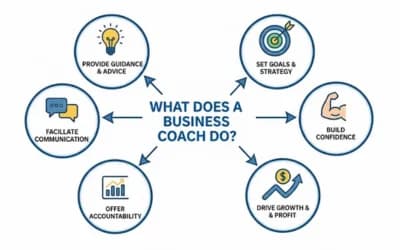
A business coach helps you turn goals into steady execution. You may already have ideas, plans, and advice from trusted people. What you often need is a partner who helps you decide what matters now and follow through.
A business coach does not run your company for you. They help you lead it better. They ask better questions, challenge weak assumptions, and help you stay accountable to the actions you chose.
As of February 2026, manager behavior remains one of the biggest drivers of team outcomes. Gallup's global workplace report 1 says managers account for 70% of engagement variance. That is why coaching is practical, not optional, for many owners and leaders.
What a Business Coach Actually Does Week to Week
The phrase "business coach" can sound vague. In practice, the role is concrete and repeatable.
A strong business coach helps you do six jobs well:
-
Set the right priorities. You sort urgent noise from strategic work so your time protects growth.
-
Turn goals into weekly actions. You move from broad intent to specific actions, owners, and dates.
-
Improve decision quality. You test assumptions, clarify trade-offs, and choose with less emotion.
-
Strengthen team communication. You prepare hard conversations and give clearer direction.
-
Build your leadership range. You learn when to coach, when to direct, and when to step back.
-
Hold execution accountability. You review commitments every session and close the loop.
This work sounds simple, but it is hard to sustain without structure. Good coaches keep the structure visible. They do not let "busy" replace progress.
Harvard Business Review's executive coaching review 2 described similar patterns years ago: top coaching use cases include development, transition support, and confidential thinking space. That remains true in small businesses today.
Why This Matters for Business Results
Most owners do not hire a business coach for insight alone. They hire for better outcomes.
Better leadership habits usually show first in team behavior. You see earlier risk flags, cleaner ownership, and fewer stalled decisions. Financial impact follows when those habits stay consistent.
Trust and safety play a major role here. Gallup's research on psychological safety 3 links safer team climates with stronger engagement and performance signals. A business coach helps you create those conditions through daily leadership behavior, not slogans.
The same applies to relationship quality. Center for Creative Leadership research 4 links empathetic leadership to stronger manager effectiveness ratings. Coaching helps you practice that in real conversations while still holding standards.
Real Coaching Scenarios
In one client team of 12, weekly meetings looked efficient on paper. Updates were short, and decisions looked fast. In reality, people held back risks until late in the cycle, and rework kept growing.
We changed three routines in coaching: pre-meeting risk notes, one clear decision owner, and a two-minute "what are we missing" check at close. Within five weeks, hidden issues surfaced earlier and rework dropped. The leader did not add hours. She changed how she led the same hour.
In another coaching engagement with a founder-led company, the owner was in every decision. Revenue was growing, but decision queues were slowing the whole team. Managers waited for approval even on low-risk calls.
We built a decision-rights map, weekly delegation review, and a simple escalation rule. Within two months, managers were bringing options instead of raw problems. The owner got strategic time back and team confidence rose.
These are typical coaching wins. You usually see behavior gains first, then business gains.
What Happens in the First 90 Days
A useful coaching process has clear phases. You should know what will happen and why.
Days 1 to 30 focus on diagnosis and direction. You define outcomes, current constraints, and leadership patterns that block progress. You also choose baseline metrics so you can track change.
Days 31 to 60 focus on execution rhythm. You run weekly commitments, test new conversation scripts, and adjust leadership routines that create drag. You keep the scope tight so progress is visible.
Days 61 to 90 focus on transfer and scale. You embed the best routines into team operations. You decide what to keep, what to stop, and where deeper coaching is still needed.
In my work with leaders, this timeline keeps momentum high without rushing important behavior change.
What a Good Coaching Session Looks Like
Many leaders ask what happens inside a business coaching session. The rhythm is simple, and that simplicity is the point.
You start with commitments from last week. What moved, what stalled, and what changed since the last conversation. A good coach does not skip this step because accountability creates compounding progress.
Next, you focus on one or two priority decisions. You clarify the goal, test assumptions, and identify the real constraint. This keeps sessions practical and tied to business reality.
Then you practice leadership moments before they happen. You might rehearse a hard feedback conversation, a delegation reset, or a decision with competing trade-offs. This is where emotional intelligence in leadership becomes an operating skill, not theory.
You end each session with clear actions, dates, and owners. If a commitment has no date, it is not a commitment. If it has no owner, it usually does not happen.
Over time, this session rhythm reduces decision drift. It also builds confidence because progress is visible week by week.
Business Coaching vs Consulting vs Mentoring
These roles overlap, but they are not the same.
Business coaching develops your capacity to lead and decide. Consulting gives expert recommendations for specific problems. Mentoring shares lessons from personal career experience.
If you need technical answers now, consulting may be the right first move. If you need stronger judgment, communication, and follow-through, coaching is often the better path.
Most growing firms use more than one support model over time. What matters is clarity about role and outcome before you start.
If you are comparing leadership modes inside your team, this breakdown in coaching versus managing helps you choose the right approach in each moment.
What a Business Coach Cannot Do
Good coaching has limits, and those limits matter.
A business coach cannot fix a broken business model by conversation alone. A coach cannot replace missing technical expertise you do not have in-house. A coach also cannot do the work for you between sessions.
Coaching fails when goals are vague, commitment is low, or accountability is optional. It also fails when people use coaching as image management instead of real change.
A credible coach names these limits early. That honesty builds trust and protects your investment.
Signs Your Coaching Is Working
You need motivation, but evidence has to lead. Track a small set of indicators monthly.
Use practical measures: decision cycle time, escalation quality, one-on-one consistency, and retention risk for key people. Add one business measure tied to your priority, such as margin, delivery speed, or client renewal rate.
You should also track your communication quality as a leader. If you want a practical standard, this post on emotional intelligence in leadership gives a simple behavior lens.
Another good signal is listening quality. Leaders who improve listening get better information earlier, which improves decisions. This guide on active listening outlines how to build that habit.
When these indicators improve for two to three months, coaching is doing its job.
What You Need to Bring for Coaching to Work
Great coaching is not passive. The coach drives structure, but you drive change through action.
Show up prepared with facts alongside feelings. Bring current priorities, blocked decisions, and honest updates on what you did or did not complete. This gives the session real traction.
Be open about patterns that are not working. Most leadership bottlenecks repeat in how you communicate, delegate, and respond under pressure. Coaching gets valuable when those patterns are named directly.
Do the between-session work. Read the notes, run the conversation, make the decision, and report what happened. Small, consistent actions beat occasional big effort.
Be willing to adjust course. Some strategies will not work in your context, and that is normal. A good coach helps you learn fast and adapt without losing momentum.
If you want a practical starting point, define one behavior you will change this week and one metric you will track by Friday. That is enough to begin.
How to Choose the Right Business Coach
Fit matters as much as credentials. Ask focused questions before you commit.
Ask about their process, not philosophy alone. You should hear how they assess, plan, review, and measure progress.
Ask for examples of similar leadership situations. You do not need identical industry background, but you do need relevant pattern recognition.
Ask how they handle accountability when commitments slip. Their answer will show whether they can hold standards without damaging trust.
Ask what happens when coaching is not the best tool. A mature coach will say so.
Finally, test chemistry in a real conversation. You should feel challenged and respected at the same time.
Let's Build Brilliance Together
A business coach helps you build better leadership habits, not dependency. The goal is stronger judgment, clearer communication, and consistent execution that your team can sustain.
If you want structured support on that path, Executive Leadership & Career Coaching gives you practical tools for decision quality, delegation, and team performance.
If you are considering coaching and want an honest fit check, reach out for a free consultation. No sales pitch, just a focused conversation about your goals and constraints.
Research Notes & Sources
If you want to go deeper, these are the studies and reports behind the key points in this post.
- State of the Global Workplace Report(gallup.com)
- What Can Coaches Do for You?(hbr.org)
- How to Create a Culture of Psychological Safety(gallup.com)
- The Importance of Empathy in the Workplace(ccl.org)
Category & Tags
Frequently Asked Questions
What does a business coach actually do?
A business coach helps you set priorities, make better decisions, and follow through. They ask structured questions, challenge assumptions, and hold you accountable to actions between sessions.
Why does business coaching work?
Business coaching works because it turns ideas into behavior change. Leaders gain clearer priorities, stronger communication habits, and better follow-through on key actions. Gallup also reports manager behavior drives most engagement variance.
What should I look for in a business coach?
Look for relevant leadership experience, a clear coaching process, strong listening skills, and evidence of results. You should also feel safe being candid with them.
What should my coach expect from me?
Expect to show up prepared, complete agreed actions, and discuss what is not working. Coaching works best when both coach and client are honest and consistent.
About the Author

About the Author
Mark Mayo
Head Coach, MBC
We get up each morning excited about sharing our 20-plus years of business acumen with small business owners and their teams. Collaborating with hard-working owners to achieve their personal and business goals brings rewards. When we develop you and grow your leaders, we create the momentum that moves you and your business forward. It starts with a first step. Then we can build brilliance together.
Related Articles
Learning Agility: Why the Fastest Learners Lead Best
Learning agility predicts leadership success better than experience alone. Here is what it means for small business leaders and how to build it this month.
Read Learning Agility: Why the Fastest Learners Lead Best
Beyond IQ and EQ: Leadership Intelligences Nobody Taught You
IQ EQ XQ AQ leadership is not about choosing one quotient. Learn what each predicts, where each breaks down, and how small business leaders build all four.
Read Beyond IQ and EQ: Leadership Intelligences Nobody Taught You
Experience Intelligence: Why Your Best Leaders Design Experiences, Not Manage Outcomes
Experience intelligence is the leadership skill of designing how people feel at work. Learn why listening is the foundation and how to start this week.
Read Experience Intelligence: Why Your Best Leaders Design Experiences, Not Manage Outcomes