Leadership Transition & Change
The Power of Fractional Leadership: Practical Value for Small Businesses
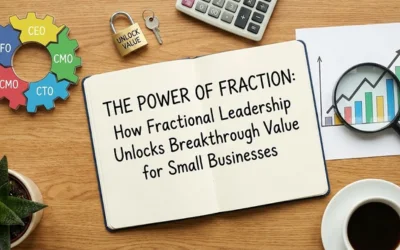
Fractional leadership gives you senior executive capacity without a full-time executive salary. For many growing firms, that is exactly the bridge they need.
You may have a clear growth goal but no clear owner for strategy, execution cadence, or team alignment. A FL leader can close that gap quickly.
This model is not a compromise role. Done well, it is targeted leadership for a specific stage, scope, and set of outcomes.
What Fractional Leadership Actually Means
Fractional leadership means hiring a senior leader part-time for a defined mandate. That leader could be a fractional COO, CFO, CMO, or CEO depending on the bottleneck.
Harvard Business Review 1 describes this model as part-time senior leadership for firms that need fast impact without a full-time executive hire.
The key is focus. A FL leader should have clear outcomes, defined decision rights, and a fixed review cadence.
Without that structure, the model becomes advisory noise. With that structure, it can create fast and measurable progress.
Why This Model Works
FL works because it matches leadership intensity to real business need. You do not pay for unused executive capacity.
It also works because experienced leaders usually identify high-impact points quickly. They have seen similar patterns before and can prioritize hard trade-offs faster.
Another advantage is objectivity. A FL leader can challenge habits that insiders may not question.
This outside perspective matters during transitions, where established routines often stop working.
Where FL Leaders Add the Most Value
FL leaders are most useful when the business has clear pressure and unclear ownership. Common high-impact use cases include:
-
operating rhythm and accountability reset
-
decision-rights design for faster execution
-
strategy translation into 90-day plans
-
leadership team alignment and role clarity
-
growth transition support during scale phases
-
board, investor, or lender communication readiness
Each case needs a different executive profile. The right role comes from the problem, not from title preference.
Real Scenarios: How the Model Works in Practice
In one client team of 18, revenue had grown fast but operations had not kept pace. Delivery dates kept slipping, and leaders blamed each other in weekly reviews.
We placed fractional COO support for two days per week. The first step was a simple operating cadence with clear owners, weekly risk review, and decision rules.
Within six weeks, escalation quality improved and cross-team delays dropped. The team did not add headcount first. They improved how decisions moved through the system.
In another coaching engagement with a founder-led company, the CEO was still approving most commercial decisions. Managers had strong intent but low confidence.
FL support focused on decision boundaries, manager coaching, and revenue review discipline. After two months, managers owned more decisions and CEO overload dropped.
These outcomes came from structure, not heroics. FL works when role clarity and cadence are explicit from day one.
The First 90 Days of a Strong Fractional Engagement
A strong fractional engagement should look disciplined, not vague.
Days 1 to 15: assess and align.
Clarify goals, map bottlenecks, define scope, and agree on success metrics.
Days 16 to 45: execute and stabilize.
Implement core routines, close obvious ownership gaps, and create reliable reporting.
Days 46 to 90: transfer and scale.
Build internal capability so progress does not depend on external presence.
In my work with leadership teams, this sequence reduces churn because expectations stay clear for everyone involved.
Signs Your Business Is Ready for FL
You are likely ready when you can describe both the bottleneck and the desired outcome.
Readiness signals often include:
-
growth has outpaced operating discipline
-
one executive gap is limiting speed or quality
-
major transition requires experienced leadership now
-
full-time hire risk is too high for this stage
-
internal leaders need development in a defined area
If you cannot define the core bottleneck yet, start there before hiring any fractional role.
Signs It May Not Be the Right Move Yet
FL is not a cure-all. It can fail when the basics are missing.
It is usually the wrong first move when your core business model is still unproven. It is also risky when founders want advice but will not share decision authority.
Another risk is unclear scope. If the role has no measurable outcomes, the engagement will drift into reactive support.
Budget matters too. If the business cannot sustain even a focused fractional mandate, stabilize cash first and revisit later.
Cost and Risk: A Practical View
Leaders often compare fractional cost to full-time salary and stop there. The better comparison includes speed, risk, and opportunity cost.
A delayed decision can cost more than a fractional retainer. So can repeated rework from unclear ownership.
That said, cost discipline still matters. Start with a focused mandate and short review cycle, then expand only if value is clear.
A common structure is a 90-day engagement with explicit milestones, weekly visibility, and a transfer plan.
How to Select the Right FL Leader
Look for pattern fit first. Has this person led through similar transitions at your stage or one stage ahead?
Ask how they define scope, metrics, and decision rights in week one. Ask what routines they install by week four.
Ask how they develop internal leaders and transfer capability, not how they solve problems personally. A strong fractional leader should leave your team stronger.
Ask for examples where they ended an engagement after capability transfer. That usually signals a low-ego, high-impact approach.
Finally, test working style in a real discussion. You should feel challenged, clear, and respected.
Integrating FL With Coaching
FL and coaching are not competitors. They solve different layers of the same growth problem.
FL leaders often build operating structure and decision discipline. Coaching helps leaders sustain those habits and grow leadership range.
If your leadership team is shifting roles, this article on coaching versus managing can help clarify when to guide, direct, or delegate.
If your bottleneck is execution quality in owner-led growth, this guide on what a business coach can help with complements the fractional model.
Together, these approaches reduce dependency and increase internal capability.
How to Start Without Overcommitting
Start with one business-critical objective and one leadership gap. Scope the role to that objective for 90 days.
Set weekly review rhythm, monthly metric review, and one capability-transfer target. Keep the mandate narrow until evidence supports expansion.
This approach lowers risk and increases clarity for everyone across planning, hiring, reporting, and weekly decision reviews.
If outcomes are clear at day 90, continue with a refined scope. If not, adjust role design or stop the engagement.
A Quick FL Fit Test
If you are unsure about fit, run this short test with your leadership team. Keep the answers honest and concrete.
Question one: do we have one clear executive gap that is slowing results right now?
Question two: can we define two or three outcomes for the next 90 days?
Question three: are founders ready to share decision rights in the target area?
Question four: can we commit to a weekly review rhythm with full visibility?
Question five: do we have one internal leader who can own transfer and continuity?
Question six: can we fund the role without hurting short-term stability?
If most answers are yes, the model is likely worth testing. If most answers are no, pause and fix readiness first.
This test is simple on purpose. It prevents expensive starts with unclear scope.
In my work with growth teams, this quick check improves outcomes because everyone agrees on why the role exists before day one.
Weekly Rhythm With an FL Leader
A clear weekly rhythm turns part-time hours into full-time impact.
Monday: align on top priorities, blockers, and decision needs for the week. Confirm owners and due dates before work starts.
Midweek: review progress, unblock high-risk items, and resolve decisions that cannot wait for Friday.
Friday: close the loop on commitments, update metrics, and document carry-over work for next week.
Keep meetings short and focused. A long meeting with fuzzy ownership is worse than a short meeting with clear next steps.
Use one live tracker for goals, owners, status, and risk level. Shared visibility reduces confusion and stops repeat debate.
Treat each week as a sprint with a clear close. FL works best when the team can see progress in real time.
When this rhythm is stable, you can scale scope with less risk. When the rhythm breaks, fix cadence before adding more initiatives.
Let's Build Brilliance Together
Fractional leadership can be a high-impact move when growth demands senior capability before a full-time hire makes sense. The model works best with clear scope, clear metrics, and strong transfer expectations for your business.
If you want structured support for this growth phase, Executive Leadership & Career Coaching can help you align cadence, decision quality, and team capability.
If you are exploring whether fractional leadership is right for your next stage, reach out for a free consultation. No pressure, just an honest discussion of fit, scope, and outcomes.
Research Notes & Sources
If you want to go deeper, these are the studies and reports behind the key points in this post.
- Harvard Business Review (hbr.org)
Category & Tags
Frequently Asked Questions
What is fractional leadership?
Fractional leadership means hiring a senior executive part-time for a defined scope and outcome. You get high-level strategy and execution support without the cost and commitment of a full-time C-suite hire.
Why does fractional leadership work for small businesses?
It works because you can add experienced leadership quickly, focus that time on high-impact priorities, and scale involvement as needs change. Strong fractional leaders also build internal capability so your team gets stronger over time.
What are signs my business is ready for fractional leadership?
Common signs include rapid growth with weak systems, repeated decision bottlenecks, major transitions, or a clear executive gap you cannot yet justify as a full-time role. If outcomes are urgent and ownership is unclear, fractional leadership can help.
About the Author

About the Author
Mark Mayo
Head Coach, MBC
We get up each morning excited about sharing our 20-plus years of business acumen with small business owners and their teams. Collaborating with hard-working owners to achieve their personal and business goals brings rewards. When we develop you and grow your leaders, we create the momentum that moves you and your business forward. It starts with a first step. Then we can build brilliance together.
Related Articles

What Got You Here Won't Get You There: The Leadership Habits That Stop Working
Marshall Goldsmith found that the habits driving early success become liabilities at the next level. Here are the six that trip leaders up most.
Read What Got You Here Won't Get You There: The Leadership Habits That Stop Working
From Operator to Leader: How Business Owners Make the Shift
Most owners started their business by being great at the work. That same hands-on identity becomes the ceiling. Five shifts to move from operator to leader.
Read From Operator to Leader: How Business Owners Make the Shift
Succession Planning When You ARE the Whole Business
When clients call your cell and your team waits for your approval on everything, succession planning is about detangling yourself from the business first.
Read Succession Planning When You ARE the Whole Business