Executive Presence & Influence
How to Build a Personal Brand That Reflects Your True Leadership
Personal branding is already shaping your reputation, whether you design it or not. People form an opinion before your first meeting. They scan your profile, your content, and what others say about working with you.
How to build a personal brand starts with honest clarity, not louder posting.
For executives and business owners, that reputation affects hiring, partnerships, promotions, and deal flow. Personal branding is not performance marketing for people. It is leadership clarity made visible.
The goal is not to invent a persona. The goal is to make your real strengths easier to trust, remember, and refer.
Personal Branding Audit: Start With Brand Equity
Most leaders skip this step and jump to posting. That is backwards. Your first move is a clear baseline of how people currently experience you.
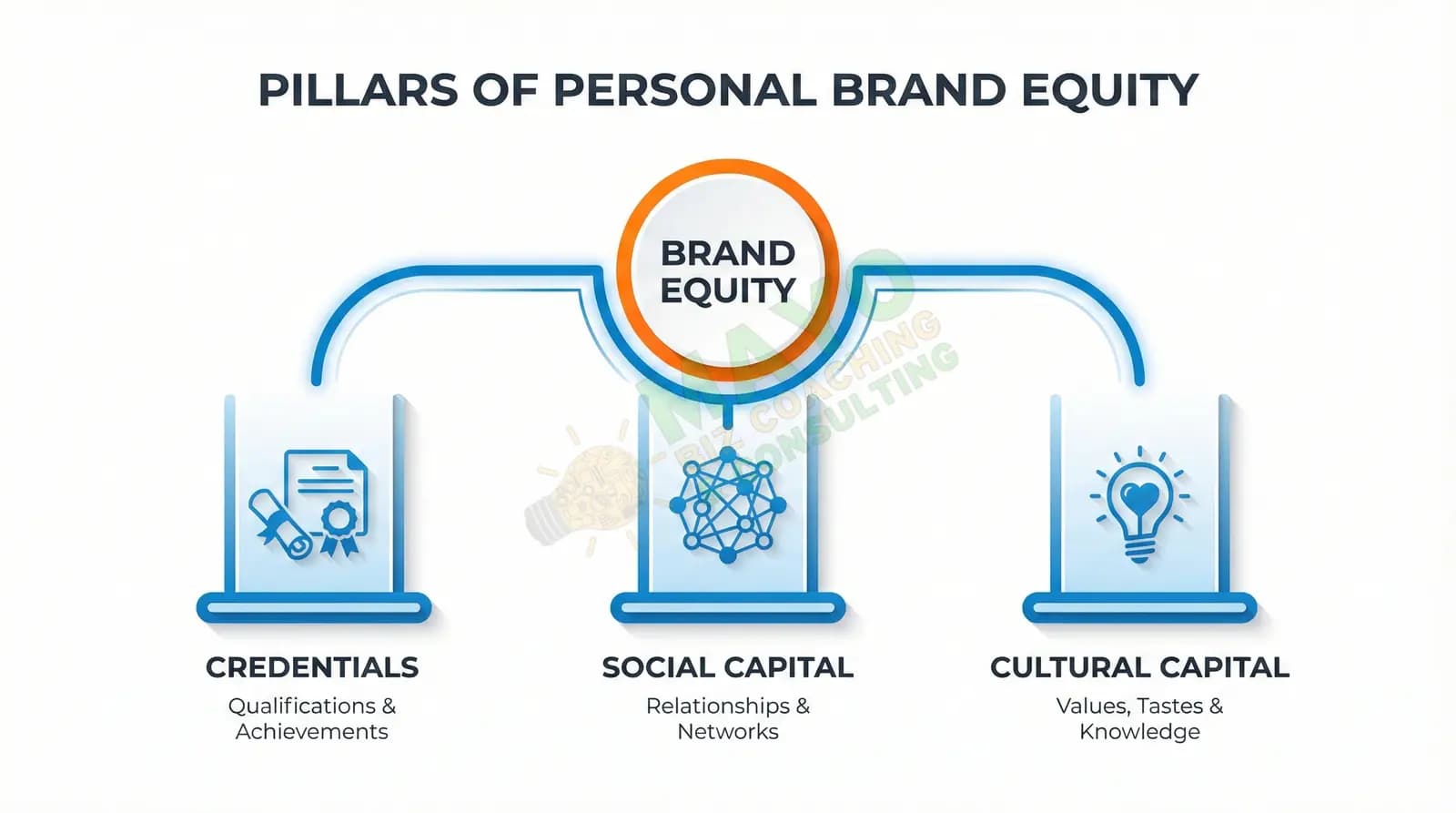
Harvard Business Review recommends a structured personal brand audit built on three forms of capital: credentials, social capital, and cultural capital (HBR: Avery and Greenwald 1).
Credentials include your concrete proof points: roles, outcomes, certifications, and technical depth. Social capital is the quality of your relationships and network trust. Cultural capital is your lived perspective, judgment, and leadership style under pressure.
Then gather feedback from "truth tellers" across contexts: peers, direct reports, former clients, and mentors. Use two core prompts in each conversation. What do people rely on me for most, and where do I add value fastest? Then ask where your stated brand misses daily behavior.
In one coaching engagement with a finance executive, her intended brand was strategic and collaborative. Feedback showed she was trusted for rigor but seen as distant in cross-functional meetings. We adjusted her meeting behaviors and communication rhythm, not her headline. Within two months, she was pulled into more enterprise projects because people trusted both her analysis and her partnership style.
Build a Strategic Narrative People Can Repeat
A strong personal brand is a narrative, not a slogan. It links what you have done, how you lead, and what problems you are best positioned to solve now.
A practical narrative answers four questions: who you help, which outcomes you create, what makes your approach different, and what proof supports those claims.
This is where many leaders over-index on achievements and under-explain method. People remember stories of decisions and trade-offs, not list items from a resume.
If "collaboration" is part of your brand, show the moment collaboration changed an outcome. If "calm leadership" is part of your brand, describe how you handled ambiguity when stakes were high.
Your narrative is stronger when it includes the people around you. Brand trust rises when people see that your leadership improves team outcomes and extends beyond personal reach. This aligns with the same leadership habits behind active listening and emotional intelligence.
Embody the Brand Through Executive Presence
Your brand lives in behavior. Profile copy helps, but meetings, decisions, and follow-through do the real work.
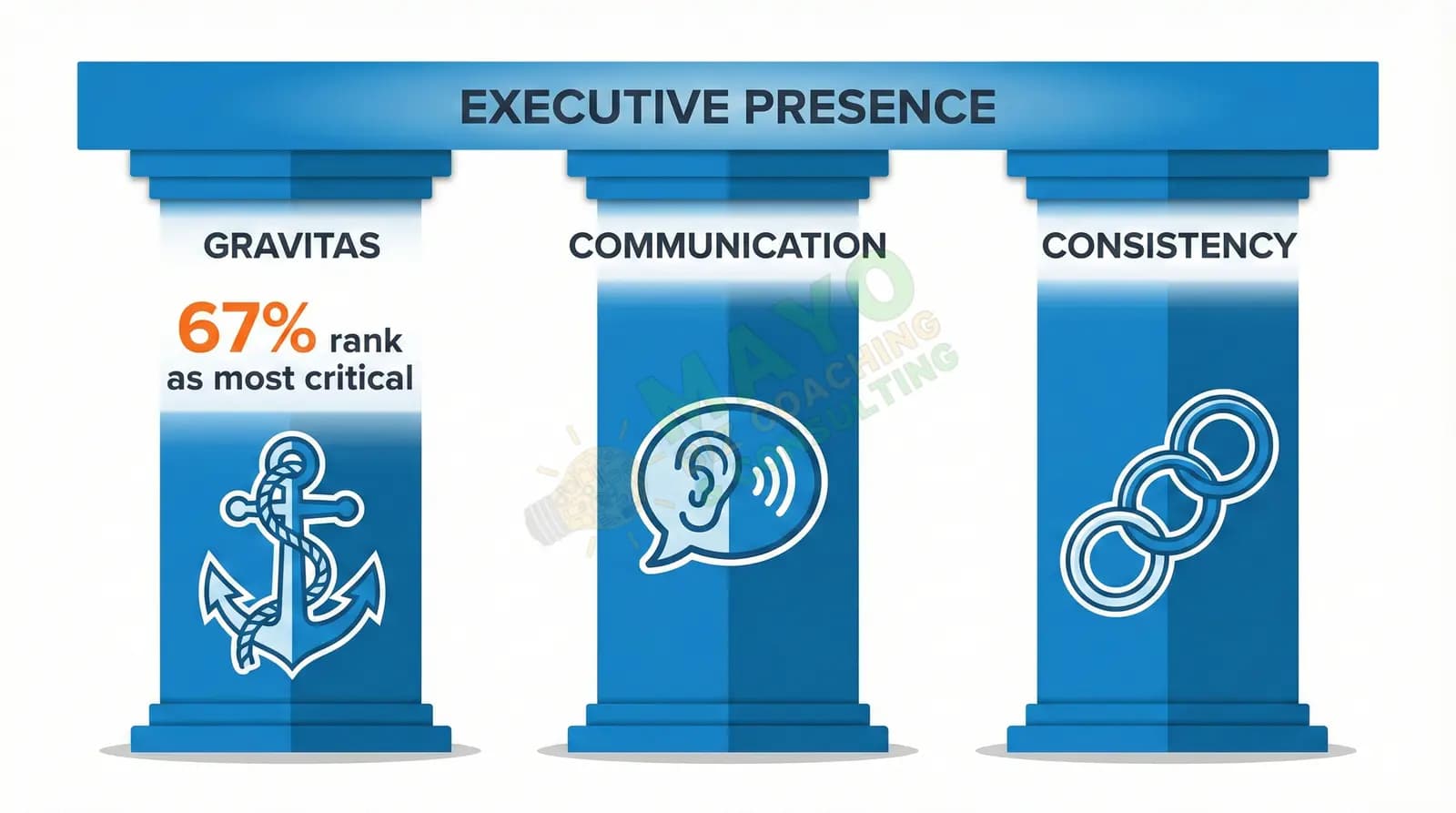
Coqual research found executive presence accounts for 26% of what influences promotion decisions (Coqual report 2). Presence is not style polish alone. It is how others experience your judgment, communication, and consistency.
Three elements matter most in practice:
Gravitas: composure, clarity, and grounded confidence under pressure.
Communication: concise thinking, clear priorities, and strong listening behavior.
Consistency: alignment between your stated values and daily decisions.
In another client case, a director wanted to be known for "people-first leadership" but regularly canceled one-on-ones during high workload weeks. The message was not credible. We restructured her calendar so critical team touchpoints were protected first. Engagement feedback improved over one quarter because behavior finally matched brand language.
Clarify Your Points of Difference
Personal branding is not about sounding impressive. It is about being clear on the distinct value you bring.
In crowded markets, "experienced leader" is generic. "Leader who stabilizes execution during scaling transitions while protecting team trust" is specific and useful.
Your points of difference often come from patterns others see before you do. Ask: which problems do people bring to me most? Which calls am I asked to break? Where do my teams perform better than peers?
That repeated demand is market feedback. It is usually a stronger brand signal than self-description.
Make Visibility Useful, Not Performative
Visibility matters, but quality matters more than volume. LinkedIn and Edelman found strong thought leadership influences purchasing and partner consideration. Their report showed 75% of decision-makers researched offerings they had not previously considered (LinkedIn and Edelman report 3).
The same research shows weak thought leadership can reduce trust. So the standard is not "post more." The standard is "publish ideas people can use."
For most executives, one practical cadence is enough. Share one insight post each week tied to a real decision. Publish one monthly long-form point of view with proof and examples. Add one short client or team lesson each week with a clear takeaway.
This cadence is sustainable and credible. It builds recognizability without turning your brand into noise.
Build a Signature Message Stack
Many leaders know what they do but struggle to say it clearly in high-stakes moments. A signature message stack helps you stay consistent across interviews, sales calls, board meetings, and internal updates.
Use three layers in order. Start with one line on who you help, what you improve, and why your approach is distinct. Add three proof stories that show results, behavior, and judgment. Close with one decision philosophy that explains how you make tough calls.
In one coaching engagement with a technology leader, her one-line statement was too broad: she helps companies scale. We rebuilt it to focus on operating reality: she helps leadership teams scale delivery without burning out their strongest people.
That shift changed the quality of inbound conversations within a month.
Proof stories also need structure. Use this sequence every time: starting context, tension, key decision, and measurable result. When stories follow that order, listeners remember both your capability and your style.
Decision philosophy is the missing layer most often. People trust leaders faster when they understand how decisions are made alongside the outcomes those decisions produced. If your principle is "clarity before speed," show where it prevented expensive rework. If your principle is "people-first accountability," show how it improved ownership without lowering standards.
This stack keeps your brand consistent across channels. It also makes content creation easier because each post maps to a proof story or decision principle.
Common Personal Branding Mistakes
Leaders usually drift off track in the same ways:
Mistake 1: Confusing visibility with positioning.
High activity without clear differentiation creates attention but not trust.
Mistake 2: Copying someone else's voice.
Borrowed tone weakens authority because it does not match your lived experience.
Mistake 3: Ignoring behavioral gaps.
If your brand says "collaborative" but your meetings feel top-down, people believe behavior.
Mistake 4: Overstating claims without proof.
Specific evidence always outperforms broad confidence statements.
Mistake 5: Treating branding as a side project.
Brand quality compounds only when it is tied to weekly leadership routines.
A 90-Day Personal Branding Plan
You do not need a full rebrand. You need 90 days of steady execution.
Days 1 to 30: audit and align.
Define your target audience, gather truth-teller feedback, and choose three core brand traits. Pick one behavior change for each trait.
Days 31 to 60: narrative and visibility.
Build a one-page narrative with your positioning statement, three proof stories, and your decision principles. Publish one practical insight weekly tied to current work.
Days 61 to 90: reinforce and measure.
Track profile response quality, speaking opportunities, referral quality, and internal influence signals. Keep what builds trust and remove what creates confusion.
In my work with senior leaders, the fastest gains come when branding work is linked to team communication habits. Better one-on-ones, clearer expectations, and consistent follow-through improve both reputation and results. Your brand gets stronger when people feel the difference in how you lead.
If you are doing this work alone, a neutral thought partner can shorten the cycle. Many leaders use business coaching to test positioning, tighten communication, and keep accountability high between milestones.
How to Measure Progress Without Guessing
Use a small scorecard every month. Ask if more of the right opportunities are coming in and whether key stakeholders use your intended brand terms. Then check that your topics match strategic focus and your internal behavior matches your external brand.
If those signals improve over two to three months, your brand is moving from concept to market credibility.
If the signals stall, do not rewrite the headline first. Audit behavior first, because trust gaps are usually day-to-day, not cosmetic.
A quarterly review keeps drift from setting in. Re-check your message stack, update proof stories with recent outcomes, and remove brand claims you are not demonstrating right now. This keeps your public profile aligned with your real leadership practice.
A Simple 30-Day Brand Reset
If this feels heavy, start with a short reset. Keep it simple. Keep it real. Keep it tied to daily work.
Week 1 is for clarity. Write one line that says who you help and what result you create. Test that line in three real talks. Keep the words people repeat back.
Week 2 is for proof. Pick two stories with clear results. Tell each story in four parts: start, problem, key choice, result.
Week 3 is for behavior. Pick one meeting habit and one follow-up habit. Make sure both habits match your brand claim.
Week 4 is for signal check. Ask five trusted people what they now rely on you for. Compare their words with your target words.
Use one tiny scorecard each week:
- quality of inbound asks.
- quality of referral intros.
- quality of internal trust signals.
Do not chase volume. Chase fit. Better signals beat more signals.
In one client team, this reset helped a leader move from vague visibility to clear positioning in one month. In another coaching engagement, it helped a founder tighten message and cut low-fit meetings by half.
This is how brand work stays useful. Small steps. Real proof. Weekly follow-through.
Keep it short. Keep it true.
Weekly Habits That Keep Your Brand Credible
Use a short weekly routine to keep your brand clear and believable. Review one meeting recording, one written update, and one stakeholder conversation each week. Check for message drift and tone drift, then adjust fast.
In my work with leaders, this routine is where most gains stick. The work is simple, but the effect compounds because people see the same message and behavior week after week.
End each week with one question: did my choices this week match the leader I say I am? If the answer is no, name one fix for next week and put it on your calendar before you log off.
Let's Build Brilliance Together
Personal branding works when your message, behavior, and leadership impact are aligned. You do not need louder promotion. You need clearer positioning and consistent execution.
If you want structured support building that alignment, Executive Presence & Communication helps you strengthen brand clarity, communication, and credibility in real leadership situations.
If you are ready to refine your personal brand with an honest outside perspective, reach out for a free consultation. No pressure, just a focused conversation about where you are and what you want your leadership brand to signal next.
Research Notes & Sources
If you want to go deeper, these are the studies and reports behind the key points in this post.
- A New Approach to Building Your Personal Brand(hbr.org)
- Coqual report(coqual.org)
- Key Findings from Our Latest Thought Leadership Research(linkedin.com)
Category & Tags
Frequently Asked Questions
Why does visibility matter for personal branding?
Visibility matters because decision-makers act on credible ideas. LinkedIn and Edelman found 75% of decision-makers researched a product they had not considered after seeing strong thought leadership. Trust grows when your perspective is consistent and useful.
What is a personal brand audit?
A personal brand audit reviews your credentials, social capital, and cultural capital, then compares your intended reputation with real feedback. HBR recommends using trusted “truth tellers” to identify gaps between how you see yourself and how others experience you.
What is executive presence?
Executive presence is how others experience your leadership under pressure. Coqual research found it accounts for 26% of what drives promotion decisions. It combines gravitas, communication quality, and consistency between your message and behavior.
About the Author

About the Author
Mark Mayo
Head Coach, MBC
We get up each morning excited about sharing our 20-plus years of business acumen with small business owners and their teams. Collaborating with hard-working owners to achieve their personal and business goals brings rewards. When we develop you and grow your leaders, we create the momentum that moves you and your business forward. It starts with a first step. Then we can build brilliance together.
Related Articles
Building Executive Presence: Command a Room Without Saying a Word
Executive presence accounts for 26% of promotion decisions, yet 67% is gravitas, not polish. Learn to build presence that earns trust through substance.
Read Building Executive Presence: Command a Room Without Saying a Word
The Power of Active Listening: A Leadership and Life Skill
Active listening goes beyond hearing words. Learn how this essential leadership skill builds trust, strengthens relationships, and drives team success.
Read The Power of Active Listening: A Leadership and Life Skill
Your Team Says Everything Is Fine. It Isn't.
Managers think engagement is improving. Their teams disagree. Here's how to spot the leadership perception gap and start hearing what's real.
Read Your Team Says Everything Is Fine. It Isn't.